
Kitchen Drain Blockage: Causes, Signs, and Effective Solutions
A kitchen drain blockage is a common plumbing problem that can disrupt everyday household activities. Food waste, grease, soap residue, and debris can gradually build up inside the drainage system, causing slow water flow or complete blockage. Understanding the causes and warning signs can help homeowners take timely action.
If you are experiencing recurring kitchen drainage problems, U Call We Fix can provide professional plumbing assistance to identify the cause and recommend a suitable solution.
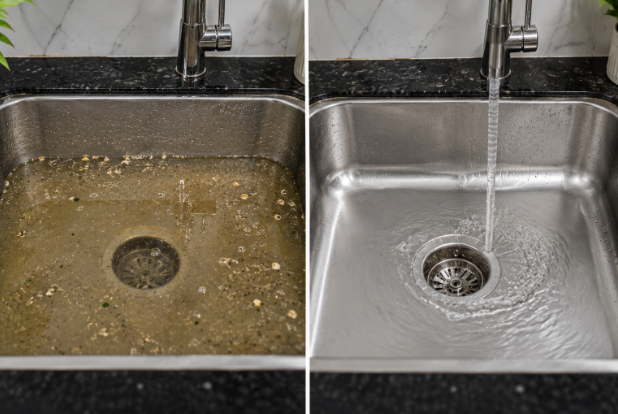
What Causes a Kitchen Drain Blockage?
Several factors can contribute to a clogged kitchen sink. Identifying the cause is important because the right solution depends on the type and severity of the blockage.
Food Waste and Debris
Small food particles can enter the sink drain while washing dishes. Over time, these particles accumulate inside the pipe and restrict water flow. Even with a sink strainer, small pieces of food can eventually enter the drainage system.
Grease and Oil Buildup
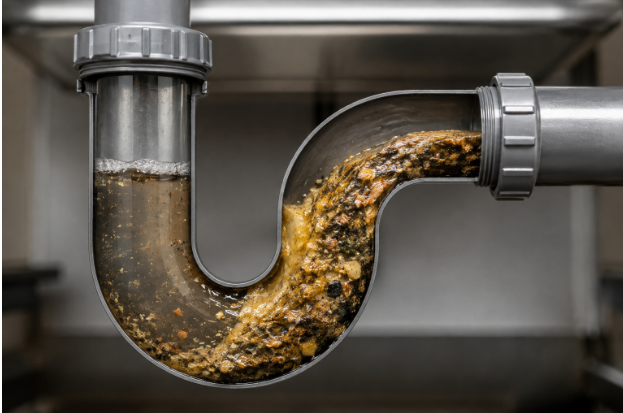
Pouring cooking oil, grease, or fat down the kitchen sink is a common cause of kitchen sink blockage. These substances may appear liquid when warm, but they can cool and stick to the inside of pipes. Over time, the buildup becomes thicker and traps other debris.
Soap and Cleaning Residue
Soap, detergent, and cleaning products can combine with grease and other materials inside the drain. This can gradually reduce the diameter of the pipe and contribute to a kitchen drain blockage.
Foreign Objects
Small objects accidentally falling into the sink can create an obstruction. Items such as food packaging pieces, plastic, or other debris can become trapped inside the drainage pipe.
Signs of a Kitchen Drain Blockage
Recognizing the early warning signs can help prevent more serious kitchen plumbing problems.
Slow Drainage
If water takes longer than usual to disappear from the sink, there may already be a partial blockage. A slow kitchen sink drain should not be ignored because the obstruction can become worse over time.
Water Pooling in the Sink
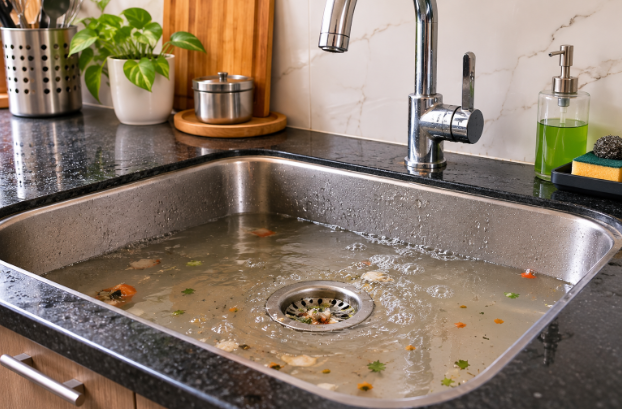
Water remaining in the sink after use is a clear indication that the drainage system is not functioning properly. It may indicate a significant blocked kitchen sink.
Unpleasant Odours
Food waste and grease trapped inside a drain can produce unpleasant smells. If bad odours continue even after cleaning the sink, there may be debris inside the drainpipe.
Gurgling Sounds
Gurgling or bubbling sounds from the sink can indicate restricted water flow or trapped air inside the drainage system.
Water Backflow
In severe cases, water may come back into the sink instead of flowing through the drain. This can indicate a serious kitchen drain blockage that may require professional attention.
How to Fix a Kitchen Drain Blockage
The location and degree of the obstruction determine the best course of action.
Remove Visible Debris
Start by checking the sink strainer and removing any visible food particles or debris. Cleaning the strainer regularly can reduce the risk of future sink blockage.
Use a Plunger
A sink plunger can sometimes clear minor blockages by creating pressure inside the drain. Make sure there is enough water in the sink to cover the plunger cup before using it.
Clean the Drain Trap
The trap beneath the sink can collect food particles, grease, and other debris. If you are comfortable performing basic maintenance, the trap can be cleaned carefully. Always place a container underneath before opening it to prevent water from spilling onto the floor.
Avoid Harsh Chemicals
Chemical drain cleaners may provide temporary results, but frequent use can potentially damage plumbing components and create safety concerns. For persistent kitchen drain blockage, professional assessment is usually a safer approach.
Contact a Professional Plumber
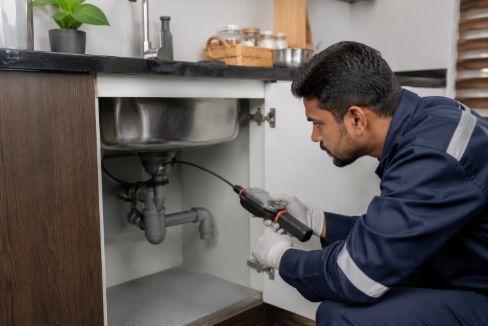
If basic methods do not solve the problem, the blockage may be deeper inside the drainage system. Professional plumbers can identify the location of the obstruction and use suitable equipment for kitchen drain cleaning and kitchen drain repair.
How to Prevent Kitchen Drain Blockage
Prevention is easier and more cost-effective than dealing with repeated drainage problems.
- Use a sink strainer to catch food particles.
- Never pour cooking oil or grease into the kitchen sink.
- Dispose of food waste properly.
- Clean the sink and drain regularly.
- Avoid allowing large food particles to enter the drain.
- Pay attention to slow drainage and unusual smells.
- Schedule professional kitchen plumbing maintenance when necessary.
Regular maintenance can help keep the drainage system working efficiently and reduce the possibility of recurring kitchen pipe blockage.
When Should You Call a Professional?
A minor kitchen drain blockage may sometimes be resolved with simple maintenance. However, professional help is recommended when the blockage repeatedly returns, water backs up into the sink, multiple drains are affected, or unpleasant smells continue despite cleaning.
A professional plumber can inspect the drainage system, identify the underlying cause, and recommend the appropriate drain repair or cleaning method. This can help prevent further damage to the plumbing system.
Why Professional Kitchen Drain Cleaning Matters
Professional kitchen drain cleaning goes beyond removing visible debris from the sink. Plumbers can inspect the drainage system and identify buildup or obstructions that may not be accessible through basic household methods.
Professional maintenance can also help identify potential kitchen plumbing problems before they develop into major issues. For homeowners experiencing repeated blockage, professional inspection can provide a more reliable long-term solution.
Conclusion
A kitchen drain blockage can result from food waste, grease, soap residue, foreign objects, or accumulated debris inside the drainage system. Slow drainage, unpleasant odours, gurgling sounds, and water backflow are common warning signs.
Simple preventive measures such as using a sink strainer, disposing of grease properly, and maintaining the drain regularly can reduce the risk of blockages. When the problem is persistent or severe, professional kitchen drain repair and cleaning can help restore proper drainage and prevent recurring issues.
For reliable and professional plumbing assistance in Coimbatore, U Call We Fix provides practical solutions for kitchen drainage issues, helping homeowners maintain an efficient and properly functioning kitchen plumbing system.
FAQs About Kitchen Drain Blockage
-
1. What is the most common cause of a kitchen drain blockage?
Grease, cooking oil, food particles, and other debris are among the most common causes of a kitchen drain blockage. These materials can accumulate inside the pipe and restrict water flow.
-
2. How can I prevent a kitchen sink blockage?
Use a sink strainer, avoid pouring grease and cooking oil into the drain, dispose of food waste properly, and clean the drain regularly. These steps can help prevent a kitchen sink blockage.
-
3. Why is my kitchen sink draining slowly?
A slow kitchen sink drain is often caused by partial blockage from grease, food particles, soap residue, or other debris. If the problem continues, professional kitchen drain cleaning may be required.
-
4. Can I fix a kitchen drain blockage myself?
Minor blockages may sometimes be cleared using a plunger or by removing visible debris. However, persistent or severe blockages may require professional drain repair to identify and resolve the underlying problem.
-
5. When should I call a plumber for a blocked kitchen sink?
Contact a professional plumber if water backs up, the blockage keeps returning, multiple drains are affected, or basic cleaning methods do not work. These signs may indicate a deeper kitchen pipe blockage.
-
6. Can grease cause a kitchen drain blockage?
Yes. Grease and cooking oil can stick to the inside of pipes and gradually accumulate. They can also trap food particles, eventually causing a blocked kitchen sink.
-
7. How often should kitchen drains be cleaned?
Regular basic cleaning should be part of normal household maintenance. If your kitchen experiences frequent drainage problems, professional kitchen plumbing maintenance can help identify and address recurring issues.